 New Orleans Ghost Tours
The Old Ursuline Convent: 1753 Walls, Casket Girls and the Attic Vampire Legend
The Old Ursuline Convent at 1100 Chartres Street is the building most ghost walks in the French Quarter cannot leave out. It is the setting of the casket girls vampire story, one of the most repeated legends in New Orleans, and it is a real museum you can visit by day. This page separates the documented history of the Ursuline nuns from the attic tale the tour guides tell, and explains what you actually see when a tour stops at the iron gate. If you want the wider tour comparison, the haunted places in New Orleans page links to the listings this guide draws on. The bookable tours are compared on ghost tours in New Orleans.
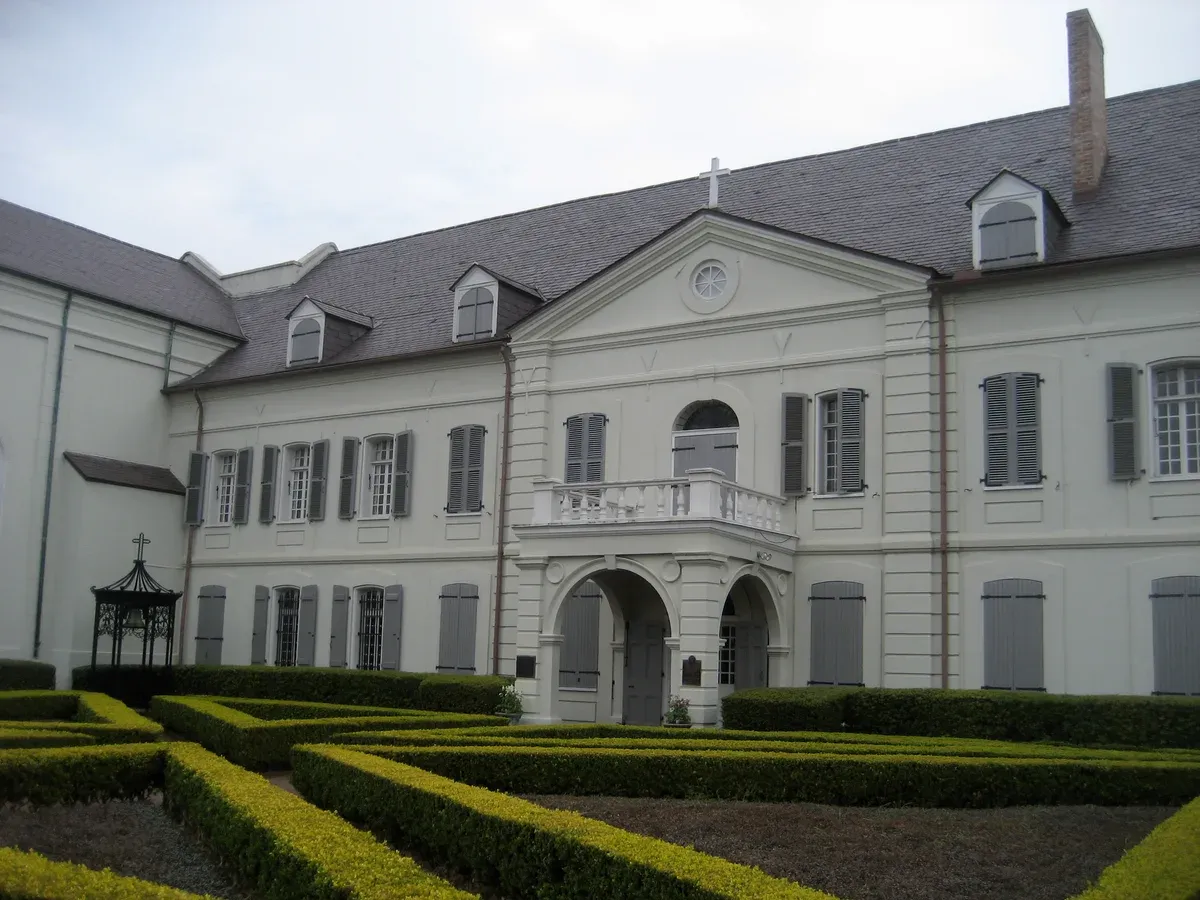
The Old Ursuline Convent, completed in 1753. Photo: Infrogmation of New Orleans, CC BY 3.0, via Wikimedia Commons
Quick answer The convent in brief
The Old Ursuline Convent is a National Historic Landmark at 1100 Chartres Street in the French Quarter, and the present building was completed in 1753. Ghost tours stop outside it because legend places vampires in the attic, shut inside the caskets of the casket girls. The Ursuline order has denied the chaperoning claim behind the story, and historians say little documentation supports the legend as it is popularly told. The building is real history either way: the National Park Service calls it the finest surviving example of French colonial public architecture in the country.
Key takeaways
- The nuns arrived from Rouen in 1727, the first convent building was finished in 1734, and the present building dates to 1753.
- The vampire attic story is a modern legend. Read how it grew in the casket girls section.
- Tours that stop here see it from the street. The Witches Brew walk at $33 includes the convent on its route.
- Planning more stops? The guide to haunted places in New Orleans covers the buildings you can see free.
History of the Old Ursuline Convent
The convent has run through almost the whole recorded life of New Orleans, from the French colonial years to the archdiocese. Its dates are well documented, unlike the vampire story.
The Ursuline Nuns Arrive in 1727
In 1727, a group of Ursuline nuns arrived in New Orleans from Rouen, in France, at the request of the governor. Their job covered three institutions at once: a convent, a hospital and a girls' school. New Orleans was a rough colonial outpost at the time, and the nuns became a fixed part of civic life from the very early years.
Their first convent building was completed in 1734. Plans for the second building were drawn in 1745, and construction on the present structure ran from 1748 to 1752, with completion recorded in 1753. Ignace Francois Broutin and Alexandre de Batz were the architects and Michael Zeringue was the builder. That makes the Chartres Street building the product of a documented design team, not anonymous colonial carpentry.
| Year | What happened |
|---|---|
| 1727 | Ursuline nuns arrive from Rouen at the governor's request to run a convent, a hospital and a girls' school |
| 1728 | The first casket girls reach New Orleans, the young French women the convent is said to have chaperoned |
| 1734 | The first convent building is completed |
| 1745 | Plans are drawn for the second building |
| 1748 to 1752 | Construction of the present structure, with completion in 1753 |
| 1794 | The second great New Orleans fire destroys 212 structures in the French Quarter, but the convent survives |
| 1809 | Mother Saint Michel Gensoul writes her vow to Our Lady of Prompt Succor and Pope Pius VII grants her request |
| 1812 | A nun places the statue in a window during a fire and the wind shifts, sparing the convent |
| 1824 | The Ursuline Academy moves to Dauphine Street and the building becomes the Archbishop's Palace |
| 1815 | Before the Battle of New Orleans the Ursulines and townspeople pray overnight, and a courier announces the British defeat during communion |
| 1960 | The convent becomes a National Historic Landmark |
| 1966 | It joins the National Register of Historic Places |
Fire, Survival and the Archbishop's Palace
New Orleans burned in 1788 and again in 1794. The second great fire, on 8 December 1794, destroyed 212 structures in the French Quarter. The Ursuline Convent survived that fire and still stands today. After the fires, Spanish rule rebuilt the city in brick and stucco with courtyards, arcades and wrought iron balconies, and the surviving convent became a rare link to the earlier French-built city.
The nuns' own story continued inside it. Mother Saint Michel Gensoul wrote her vow to Our Lady of Prompt Succor in 1809, and in 1812 a nun placed the statue in a window during a fire and the wind shifted, sparing the convent. Before the Battle of New Orleans in 1815, the Ursulines and townspeople prayed through the night, and a courier announced the British defeat during communion, ending the Mass with a Te Deum. The order left the building in 1824, when the Ursuline Academy moved to Dauphine Street. The old convent then became the Archbishop's Palace, with Bishop Louis William Valentine DuBourg among its occupants. A gatehouse was added about 1825 to 1830, turning the main entrance toward Chartres Street.
How Old Is It, Exactly, and How Do You Visit
Be careful with the claims. Some listings call the convent the oldest building in the Mississippi Valley, but the sourcing for that superlative is thin. What is documented is narrower and still impressive: the National Park Service calls it the finest surviving example of French colonial public architecture in the country, and it is among the oldest surviving buildings in the region. It became a National Historic Landmark in 1960 and joined the National Register of Historic Places in 1966.
The building works as a museum, the Old Ursuline Convent Museum. Museum hours and admission have been listed differently across sources, so check the museum website for current opening times and ticket prices before you go. Note that a ghost tour stop here is not a museum visit. Tours such as the Witches Brew walk at $33 and the Tours by Foot family walk at $29 stand outside the gate and tell the legend. Both listings describe the convent as a stop seen from outside.
Sources: Wikipedia, Old Ursuline Convent, Wikipedia, Great New Orleans Fire of 1794), Wikipedia, Our Lady of Prompt Succor
The Casket Girls: History and Legend
Every ghost walk that passes the convent tells a version of the casket girls story. Here is what the record supports and where the legend takes over.
Who the Casket Girls Actually Were
The casket girls were real, and their French name was filles a la cassette. They were young French women sent to Louisiana in the colonial period to marry settlers and start families in the struggling colony. The name comes from their luggage: each carried a small chest, called a casquette, that held her clothes and belongings. Cassette became casket in English retellings, which is where the Gothic undertone starts, long before anyone mentioned vampires.
The first group reached New Orleans in 1728, and the Ursuline nuns had arrived in 1727. That timing is the seed of the legend, because later retellings tied the nuns and the casket girls together.
What Historians Say
Historians say little documentation exists for the casket girls story as it is popularly told. The widely repeated version, in which the convent housed, chaperoned and guarded the arriving women under dramatic conditions, is not well supported by the record. The Ursuline order itself has denied that it chaperoned the casket girls, which is worth sitting with before you accept a tour guide's dramatic version. The women were real, the 1728 arrival is real, and the small chests were real. Much of the rest of the story is later invention layered on top.
That does not make the tale worthless. It explains why the building features on so many French Quarter ghost walks. It is a legend attached to a genuine 1753 structure, and legends need real walls to stick to.
The Vampire Tale in the Attic
Here is the version the tours tell. The legend places vampires in the attic of the Ursuline Convent, still shut in the caskets of the casket girls. Ghost tours claim the Old Ursuline Convent attic held vampires in the caskets of the casket girls, and tour lore adds that the shutters of the third floor were nailed shut to keep whatever was up there from getting out. The shutters detail is tour lore only, told by guides rather than recorded in any document reviewed for this page.
The fact check is blunt. The vampire tale about the attic is a modern legend. The Ursuline order has denied the chaperoning claim that the story depends on, and historians note how little documentation the popular version has. No verified record connects the attic, the caskets or the nuns to anything supernatural. When a guide on the Witches Brew walk, priced at $33, tells the story outside the gate at 1100 Chartres Street, you are hearing folklore performed in front of the building that inspired it, and that is the honest way to take it.
Why the Legend Stuck to This Building
The convent suits the story almost too well. It is old enough to feel mysterious, it survived the 1794 fire that destroyed 212 other structures, and the attic is not part of what tours show, which leaves it to the imagination. The casket girls gave it a cast of young women, sealed chests and a sea voyage from France. New Orleans already had a reputation for ghost lore, and the city's tourism board lists the fires of 1788 and 1794, yellow fever and above-ground cemeteries as the reasons it thrives here.
If you want to stand where the legend is told, the walking tours handle it better than any bus. The Witches Brew tour at $33 and the Tours by Foot walk at $29 both include the convent on their routes, seen from outside. For other buildings with their own legends, see the roundup of haunted places in New Orleans.
Sources: Wikipedia, Casquette girls, New Orleans tourism, haunted itineraries
The Old Ursuline Convent: A New Orleans Museum
A short film of the convent rooms and garden open to visitors. Third-party video by Visit New Orleans. This site did not shoot it and has no relationship with the creator.
Visiting the Convent Museum
The Old Ursuline Convent at 1100 Chartres Street works as a museum.
What You See Inside
The museum occupies the 1753 convent building at 1100 Chartres Street.
The building itself is the main exhibit. The National Park Service calls it the finest surviving example of French colonial public architecture in the country. Plans for this second convent building were drawn in 1745, the Ursuline nuns' first building on the site was finished in 1734, and the present structure was completed in 1753. Ignace Francois Broutin and Alexandre de Batz drew the plans and Michael Zeringue was the builder. It became a National Historic Landmark in 1960 and joined the National Register of Historic Places in 1966.
Hours, Tickets and the Self-Guided Tour
Guided museum tours are listed on Thursday, Friday, Saturday and Monday at 10:00, 11:00 and 1:00.
Admission prices and hours have been listed differently across sources, so check the museum website before you go and confirm both the times and the current ticket price there.
Planning Around the Ghost Stories
A daytime museum visit and an evening ghost walk cover different ground. By day you see the documented building: the 1753 convent, and the gatehouse added about 1825 to 1830 that turned the main entrance toward Chartres Street. The vampire legend about the attic is a modern legend and belongs to the tour version of the building.
If you want both, do the museum first and take a walk after dark. The New Orleans Haunted Ghost, Voodoo and Vampire French Quarter Walking Tour stops outside the convent and puts the casket girls story in its place among the Quarter's other legends for $33.
Sources: Wikipedia, AAA attraction listing
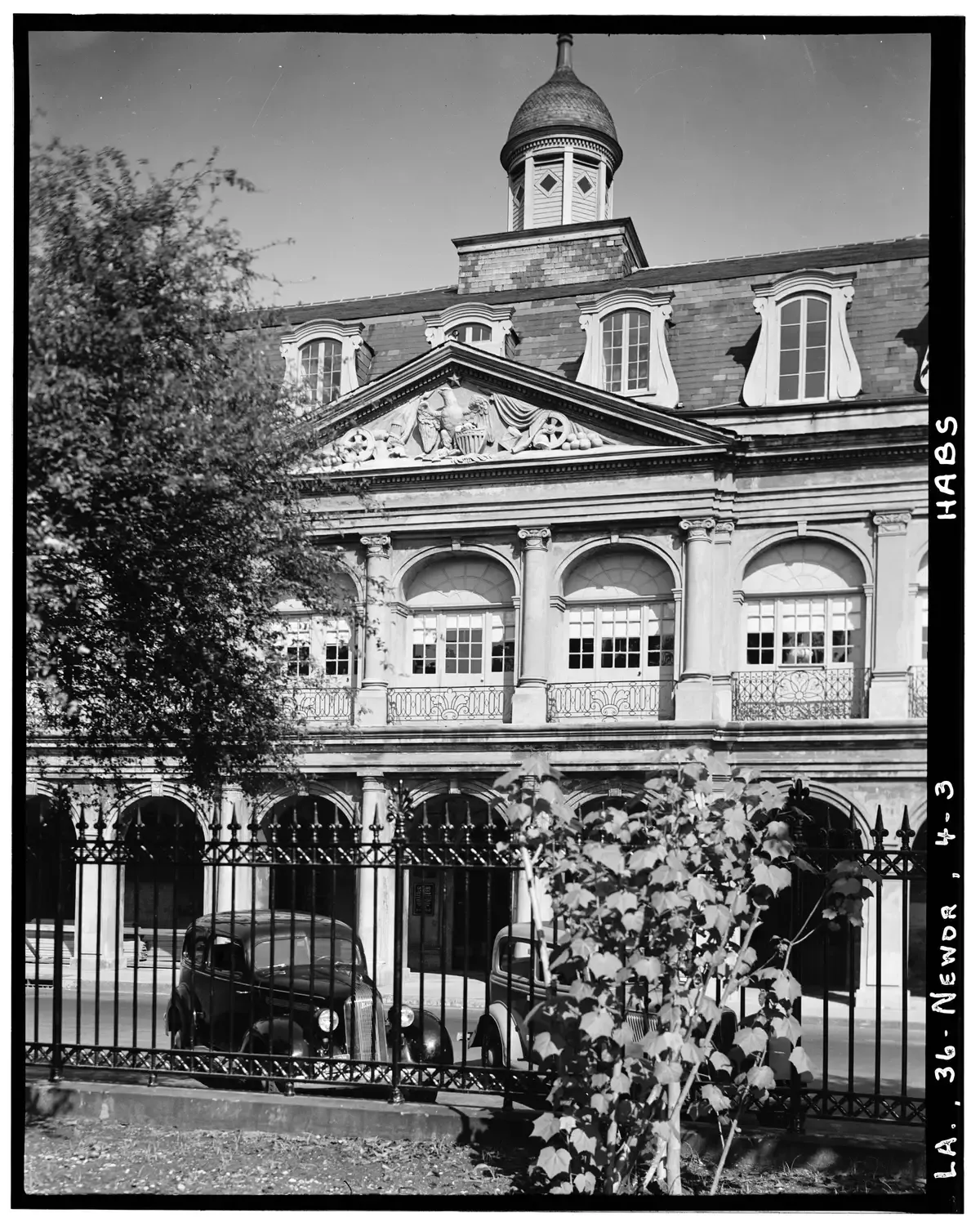
The Cabildo, built in 1799 after the great fires. Photo: Historic American Buildings Survey (Library of Congress), public domain, via Wikimedia Commons
The Convent and the Battle of New Orleans
Before the convent became a ghost story it was the religious heart of the city, and its best documented moment came during the War of 1812.
The 1815 Vow
Before the Battle of New Orleans in 1815, the Ursuline nuns and townspeople prayed through the night at the convent. The Prioress vowed that if the Americans won, the community would hold an annual thanksgiving Mass in gratitude. The devotion was addressed to Our Lady of Prompt Succor, whose statue had already earned a reputation at the convent.
A courier announced the British defeat while the congregation was at communion. The Mass ended with a Te Deum.
Our Lady of Prompt Succor
The devotion itself began at the convent. Mother Saint Michel Gensoul wrote her vow to Our Lady of Prompt Succor in 1809 and Pope Pius VII granted her request that same year. In 1812, during a fire, a nun placed the statue in a window and the wind shifted, sparing the convent. That event and the 1815 victory built the statue's following.
Pope Pius IX approved public devotion in 1851 and Pope Leo XIII granted canonical coronation in 1894. Pope Pius XI named Our Lady of Prompt Succor patroness of Louisiana in 1928. The statue now stands in the National Votive Shrine at the Ursuline Academy on State Street, not at the old convent, and the feast day is 8 January.
After the Nuns Left
The Ursuline Academy moved to Dauphine Street in 1824 and the old building took on a new civic role as the Archbishop's Palace. Bishop Louis William Valentine DuBourg occupied the building, which became known as the Archbishop's Palace. The 1753 building passed into church administration.
What happened to the Ursuline sisters in the city after that move goes beyond what this page covers. For the building itself, the arc is simple: convent from 1734, present structure from 1753, archbishops from 1824, museum today, with the National Historic Landmark designation arriving in 1960 and the National Register listing in 1966.
Sources: Our Lady of Prompt Succor, Wikipedia
Ghost Tours That Stop at the Convent
Three of the French Quarter walks listed on this site route past the Old Ursuline Convent and tell the casket girls story outside its gates.
Which Walks Include It
The convent is a stop on three walking tours. The listings describe it as a stop seen from outside, so if you want to stand inside the 1753 building, check the museum's own hours and ticket details.
The comparison below lists the price, the length and the meeting point for each walk, taken from the tour listings on the booking platforms. Start times appear on the listing when you check availability for your date. Every tour on the site offers free cancellation up to 24 hours ahead.
The Comparison
All the tours differ in what surrounds the convent stop. The Witches Brew walk pairs it with voodoo and vampire stops and finishes near Lafitte's Blacksmith Shop Bar. Tour Orleans adds a visit inside one private haunted building, though that building is not the convent.
Tours by Foot runs a 1.5 hour walk that starts at St. Louis Cathedral and is billed as family friendly. Pick by route and group style rather than by the convent alone, since all three tell versions of the same legend outside it.
| Tour | Price | Length | Meets at |
|---|---|---|---|
| New Orleans Haunted Ghost, Voodoo and Vampire French Quarter Walking Tour | $33 | 1.5 - 2 hours | Witches Brew Gallery, 311 Exchange Pl |
| New Orleans French Quarter Ghost Tour with Interior Visit | $37 | 2 hours | 620 Decatur St #600 |
| Dark Side of New Orleans: French Quarter Ghost Tour | $29 | 1.5 hours | St. Louis Cathedral, 615 Pere Antoine Alley |
What the Guides Say Outside the Gates
The story guides tell at 1100 Chartres Street is the casket girls vampire tale. Ghost tours claim the Old Ursuline Convent attic held vampires in the caskets of the casket girls. The legend is modern, and historians say little documentation exists for the casket girls story as it is popularly told. The Ursuline order itself has denied that it chaperoned the girls.
New Orleans requires tour guides to be licensed by the city. The comparison table above is the shortlist. For a wider look at the Quarter's haunted addresses, see the page on haunted places in New Orleans.
Sources: New Orleans tourism, Casquette girls
Frequently Asked Questions
What happened to the Old Ursuline Convent?
The Ursuline Academy moved to Dauphine Street in 1824 and the building became the Archbishop's Palace. Today it is the Old Ursuline Convent Museum, a National Historic Landmark since 1960 and on the National Register since 1966.
How much does it cost to rent the Old Ursuline Convent for a wedding?
This page has no wedding rental prices. For what a visit costs, check the museum website.
What is the history of the Old Ursuline Convent in New Orleans?
Ursuline nuns from Rouen arrived in 1727 to run a convent, a hospital and a girls' school. The first building was finished in 1734 and the present one in 1753. The full story is in the history section above.
Are there still Ursuline nuns in New Orleans?
The Ursuline Academy moved from the old convent to Dauphine Street in 1824, and the statue of Our Lady of Prompt Succor now stands at the Ursuline Academy on State Street. Whether sisters remain in the city today is not covered on this page. The old building itself is now a museum tied to the Ursuline Convent story.
Is the Old Ursuline Convent haunted?
The legend says vampires were kept in the attic in the casket girls' chests, and ghost tours retell it outside the gates. It is a modern story and the Ursuline order has denied chaperoning the girls. The building's real past is covered in the history section above.
Which ghost tours visit the Ursuline Convent?
Three walks route past 1100 Chartres Street, from $29 to $37, and all see it from outside. Compare them in the table in the tours section above.