 New Orleans Ghost Tours
St. Louis Cemetery No. 1: the Complete Visitor Guide
St. Louis Cemetery No. 1 is the oldest cemetery in New Orleans and the one you cannot simply walk into. Since 1 March 2015 the gates open only to relatives of the dead, to scholars and to visitors with a guide registered with the Archdiocese. This page covers the history behind that rule, why the tombs stand above ground, who lies here and what a visit costs. The official walking tour starts at $25, lasts about 55 minutes and leaves from Basin Street Station across from the gates. If you want the full story of the Voodoo queen, read the guide to the Marie Laveau tomb, and for how this visit compares with others across the city see New Orleans cemetery tours. The bookable tours are compared on ghost tours New Orleans.
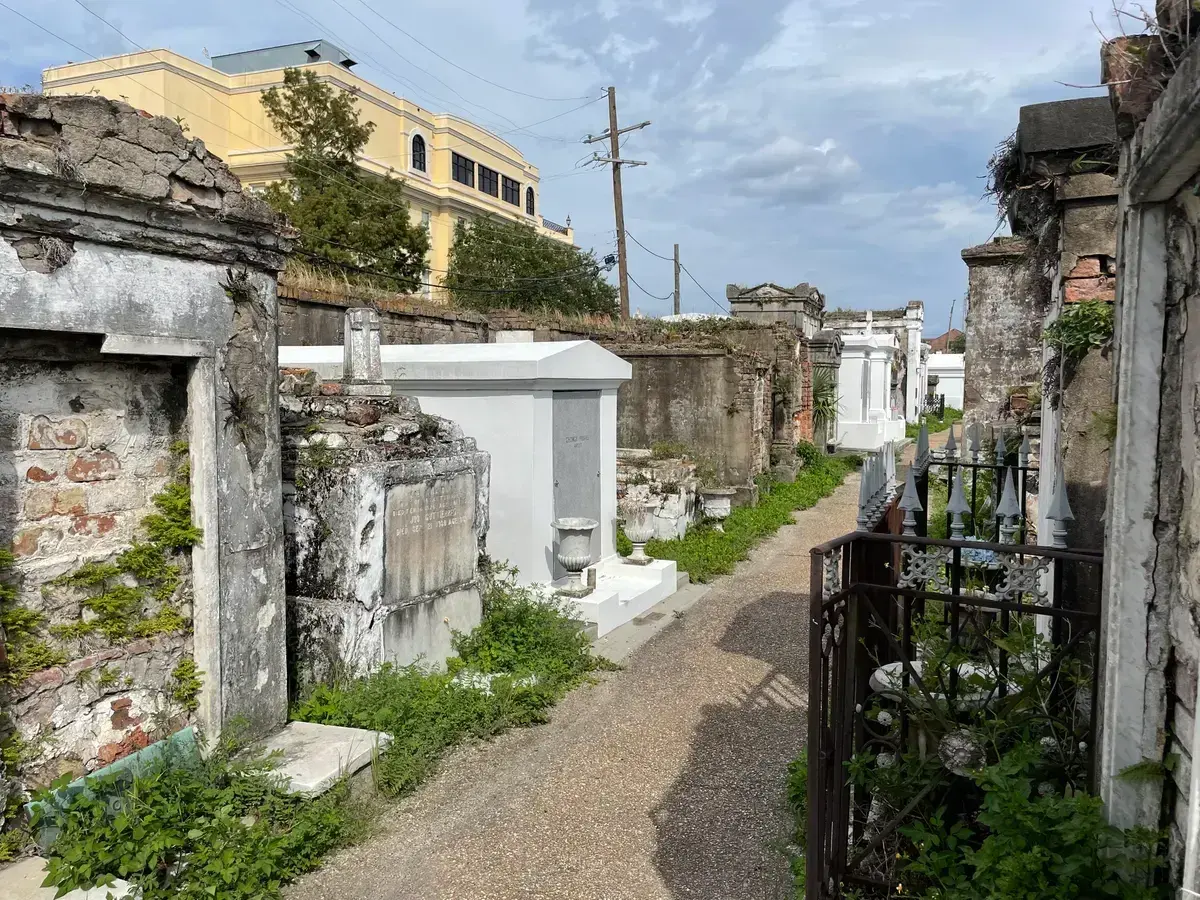
Tombs in St. Louis Cemetery No. 1, founded in 1789. Photo: Daquella manera, CC0, via Wikimedia Commons
Quick answer Visiting St. Louis Cemetery No. 1
Yes, you can visit St. Louis Cemetery No. 1, but only with a guide registered with the Archdiocese, and the official walking tour starts at $25 for 55 minutes inside the gates. Since 1 March 2015 the cemetery is closed to solo visitors, with entry limited to relatives of the dead, scholars and guided tour groups. The tour meets at the Basin St. Station visitor center at 501 Basin Street, directly across from the cemetery, and you check in 15 minutes early to receive your Cemetery Tour Access Pass.
Key takeaways
- Book the St. Louis Cemetery No. 1 Official Walking Tour, the 55 minute guided visit for $25 with groups of up to 20 and a licensed local guide.
- Learn the story of the Voodoo queen's reputed tomb on the Marie Laveau tomb page before you go.
- Compare this visit with Lafayette No. 1 and the night bus options in the guide to New Orleans cemetery tours.
- The cemetery sits on Basin Street about 0.5 miles from Jackson Square, a ten to fifteen minute walk from the French Quarter.
History of St. Louis Cemetery No. 1
The oldest burial ground in New Orleans was born out of disaster, and the disasters kept coming for the next century.
Founded in 1789 After the Fire of 1788
St. Louis Cemetery No. 1 was founded in 1789, which makes it the oldest cemetery in New Orleans. It did not appear by choice. The great fire of 1788 destroyed much of the city, including the older St. Peter Cemetery, and the new ground on Basin Street replaced it. Most sources, including Wikipedia and Archdiocese-linked material, give 1789 as the founding year, while Find a Grave dates it to 1788, so you may see both figures quoted. The cemetery occupies a single square block bounded by Basin, St. Louis, Conti and Treme streets, on the north side of Basin Street about eight blocks from the Mississippi River.
The neighborhood around it changed as much as the cemetery itself. Basin Street takes its name from the turning basin of the former Carondelet Canal, and from 1897 until the end of World War I the Storyville red-light district ran along the back side of the street. Today the neutral ground carries statues of Simon Bolivar, Benito Juarez and Francisco Morazan.
Find a Grave counts about 8,408 memorials on this one block, and lists the address as 425 Basin Street, New Orleans, LA 70112.
Fire, Fever and a City That Needed the Ground
The century after the founding was hard on New Orleans, and the cemetery fills because of it. Yellow fever arrived with summer almost every year, carried by mosquitoes that bred in the city's open wooden cisterns. In 1853 Louisiana recorded 29,120 cases and 8,647 deaths, and a single day in August brought 230 reported deaths. Counts for the city itself vary: one documented figure is 7,048 deaths, other accounts say 10,000 or more, so historians generally speak of more than 8,000 dead in the city that summer. One in five Irish immigrants in New Orleans died in 1853.
The epidemics explain the density of the tombs. Families needed vaults that could be reused, and the city needed ground that worked. Science caught up late. Walter Reed's commission only confirmed in 1900 that mosquitoes spread yellow fever, and the last United States outbreak hit New Orleans in 1905 and killed 452 people.
The cemetery also outgrew itself in a quieter way. St. Louis Cemetery No. 2 was founded in 1823 and No. 3 opened in 1854, about 2 miles from the French Quarter on Esplanade Avenue near Bayou St. John. The city's dead simply needed more room than one block could hold.
A Timeline of the Cemetery
The cemetery was founded in 1789 after the fire of 1788. St. Louis Cemetery No. 2 followed in 1823 and No. 3 in 1854.
Sources: Wikipedia, 64 Parishes, PRC
Why the Tombs Are Above Ground
The cities of the dead are not a style choice. The ground itself forced New Orleans to bury its dead above it.
The Water Table Decides Everything
New Orleans sits between the Mississippi River, Lake Borgne and Lake Pontchartrain, and that geography sets a high water table. Dig a grave in this soil and you may find water before you find depth, which made in-ground burial unreliable from the start. Coffins could pop up out of saturated ground after heavy rain. The practical answer was to build up instead of down, and by the 1820s above-ground burial had become the norm across the city.
That is why St. Louis Cemetery No. 1 looks the way it does. Most graves here are above-ground vaults built in the 18th and 19th centuries, packed wall to wall across a single square block. Historic postcards show the construction method plainly: red brick under white plaster and whitewash, which is why the cemetery reads as a maze of white walls rather than a field of headstones.
Oven Tombs, Family Tombs and Society Tombs
The simplest above-ground grave is the oven tomb, called a fours in French, a low vault sized for a single person that opens at the front. These were the burial of people of modest means. Family tombs are larger structures with space for several generations, and the cemetery also holds individual mausoleums for the wealthy and society tombs built by benevolent associations for their members. All of these stand together in a maze across the one block, which is why a guide helps: paths branch and dead-end, and the famous names are scattered through it.
There is also a Protestant section in the northwest part of the cemetery, and its graves are generally not vaulted, a reminder that burial customs followed religious lines in the colonial and early American city.
A Year and a Day, and the Caveau
Above-ground tombs were built to be reused, and the reuse follows a strict rhythm. After a burial the tomb cannot be reopened for at least a year and a day. The Louisiana heat does the rest. Inside a sealed brick vault the summer temperatures speed decomposition far faster than in-ground burial, so by the time the year and a day pass the vault is ready.
When a new burial is needed, the earlier remains are moved to a receiving vault, the caveau, at the bottom of the tomb. The name plate on the front of a family tomb may carry several generations of names, but the vault below holds all of them together. It is a practical system, and it is the reason a single tomb in this cemetery can hold dozens of people across more than a century.
Visiting St. Louis Cemetery No. 1, Final Resting Place of Voodoo Queen Marie Laveau
A news report from inside St. Louis Cemetery No. 1 on the guided visits. Third-party video by NOLA.com. This site did not shoot it and has no relationship with the creator.
Who Can Go Inside and Why
The gates closed to walk-in visitors in 2015, and the reason is written on the tomb walls.
The Rule Since 1 March 2015
Since 1 March 2015, entry to St. Louis Cemetery No. 1 is limited to three groups: relatives of the dead, scholars, and visitors with a guide registered with the Archdiocese of New Orleans. The Archdiocese announced the change in late January 2015 and put it in place about a month later. If you arrive at the gate on Basin Street without a tour booking or family business, you will not get in.
The rule applies to everyone, including visitors who only want a photograph of Marie Laveau's tomb. The practical way in for almost everyone is a guided visit, and the St. Louis Cemetery No. 1 Official Walking Tour handles the registration for you. At check-in you receive a Cemetery Tour Access Pass, which is what gets your group through the gate. Save Our Cemeteries also runs registered tours listed at $25 for adults with children under 12 free, leaving from Backatown Coffee Parlour at 301 Basin Street, and the official tour listing from the tourism board also shows $25.
The Vandalism That Closed the Gates
The Archdiocese closed the cemetery to unaccompanied visitors citing a rise in vandalism, and the incidents were specific. In December 2013 workers found the tomb reputed to be Marie Laveau's painted pink with latex paint. The Archdiocese and Save Our Cemeteries spent $10,000 restoring it, and the X marks visitors had scratched into the plaster reappeared afterward. The Archdiocese also cited littering, people camping at the cemetery, tomb break-ins and theft of security equipment.
The X marks deserve their own word. The tradition says visitors draw three X marks on the Laveau tomb, turn three times and make a wish, a belief described as decades old. Whatever its origins, the practice damaged the plaster, and the Archdiocese said unlicensed guides had been handing out markers and instructions on how to mark tombs. Its spokeswoman Sarah McDonald said unlicensed guides encouraged people to deface the tombs. On the official tour the rules are explicit: no rubbing, marking or leaving items on tombs, no touching, sitting or leaning on them, and no food inside, though lidded bottled water is allowed. The Archdiocese calls the marking vandalism, and the rule on the tour is absolute.
Registered Guides and What It Costs Them
The guides who lead you in are vetted twice over. They must be registered with the Archdiocese, show insurance and hold a city tour guide license, which New Orleans requires and which involves a written exam on city history and culture with a pass mark of at least 70 percent. The Archdiocese charges for that access.
Occasional guides could register for a one-time pass at $40, while regular tour companies paid between $4,500 and $5,400 a year, and Wikipedia records the annual company fee under the 2015 rule as $4,500 a year. Those fees are the operators' problem, not yours, and the visitor price is about $25 with the main providers.
Relatives and Scholars
The other two routes in are narrower. Relatives of the people buried here and scholars are the two groups the rule still admits without a tour. Everyone else books a registered tour.
The full practical details, prices, meeting points and what the 55 minutes inside covers, are on the St. Louis Cemetery No. 1 walking tour page.
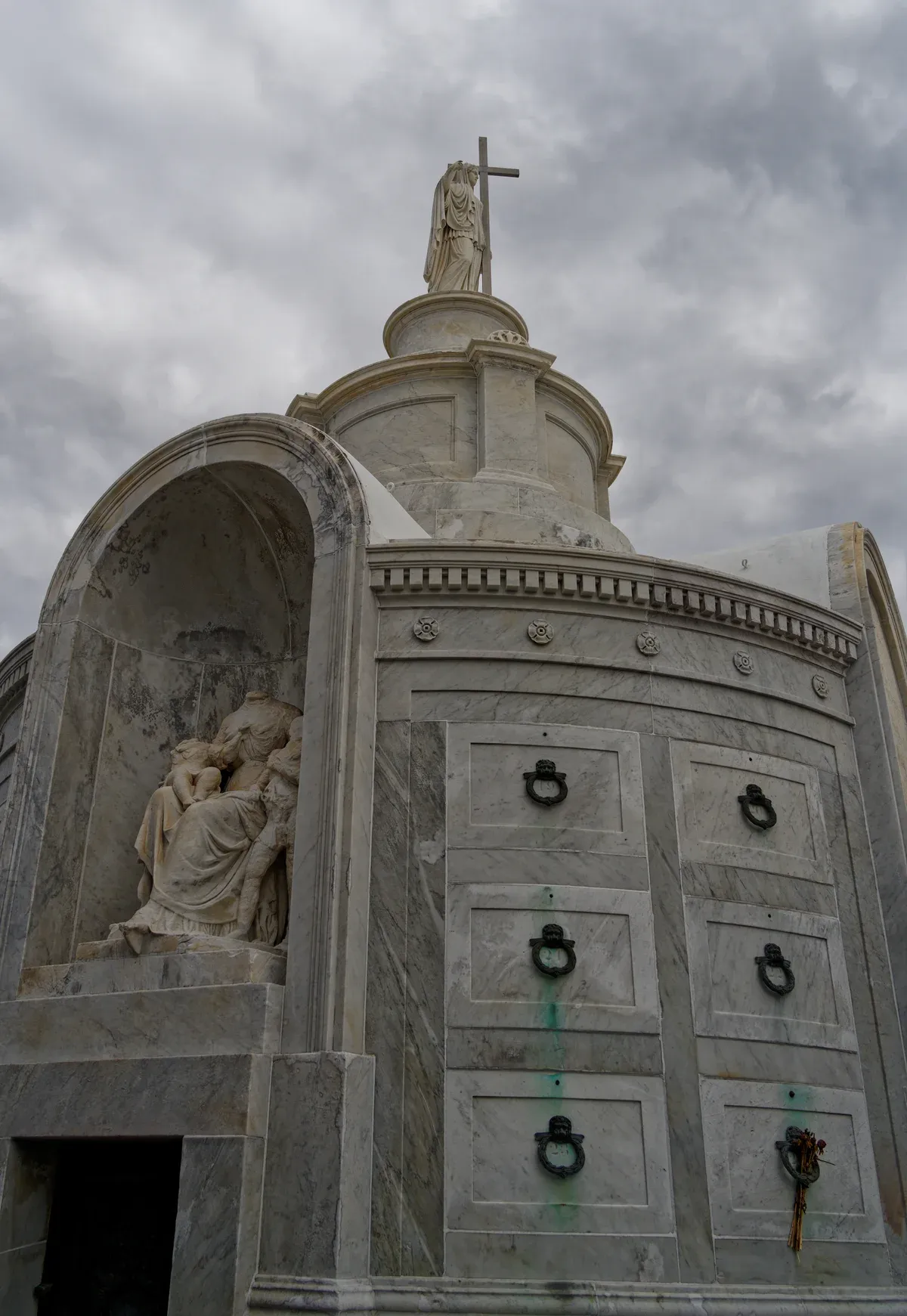
A society tomb inside St. Louis Cemetery No. 1, on this walk. Photo: miguel.discart, CC BY-SA 2.0, via Wikimedia Commons
Who Is Buried in St. Louis Cemetery No. 1
One square block holds roughly 8,408 recorded memorials, and a surprising share of them belong to people who shaped the city and the country.
The Names That Draw the Crowds
The cemetery replaced St. Peter Cemetery after the 1788 fire, and it has been filling ever since. Find a Grave counts about 8,408 memorials on this single block bounded by Basin, St. Louis, Conti and Treme streets. Some names are known worldwide. Others, like Etienne de Bore, the city's first mayor under US rule and the man who produced the first granulated sugar in the colony in 1795, matter mostly to locals and historians. The table lists the burials the sources name, with what you can see at each one.
The Protestant section sits in the northwest part of the cemetery, and its graves are generally not vaulted, which makes it look different from the rest of the grounds. Architect Benjamin Latrobe, who died of yellow fever in 1820, is also buried here. Mayor Ernest N. Dutch Morial was first buried here and was moved to St. Louis Cemetery No. 3 in 2014.
| Name | Who they were | What to look for |
|---|---|---|
| Marie Laveau | Herbalist, hairdresser and Voodoo practitioner, born 10 September 1801, died 15 June 1881. Generally believed to rest in the middle vault of the Glapion family crypt, plot 347. | A white tomb crowded with X marks drawn by visitors over decades. The Archdiocese and Save Our Cemeteries spent $10,000 restoring it and the marks returned. Full story in the Marie Laveau tomb guide. |
| Homer Plessy | Civil rights plaintiff who was arrested on 7 June 1892 for sitting in a whites-only railroad car. The Supreme Court ruled 7-1 against him in 1896. Louisiana pardoned him posthumously in 2022. | The Debergue-Blanco family tomb, marked with a bronze plaque explaining his significance. |
| Paul Morphy | Chess champion born 22 June 1837 who won the First American Chess Congress in 1857 and toured Europe in 1858 and 1859. Found dead in his bathtub at 47. | The Morphy family tomb, a stop on most guided routes. |
| Bernard de Marigny | Creole aristocrat, 1785 to 1868, who subdivided his plantation into Faubourg Marigny in 1806 and introduced the dice game that became craps. | A family tomb in the maze of vaults. His street names, Desire, Duels and Craps, still chart the neighborhood east of the French Quarter. |
| Nicolas Cage pyramid | The actor bought a pyramid tomb here in 2010. It stands nine feet tall with the Latin inscription Omnia Ab Uno, meaning Everything From One. | A white pyramid. Visitors have left red lipstick marks on its surface. |
| Etienne de Bore | First mayor of New Orleans under US rule, 1803 to 1804, and the sugar pioneer who granulated sugar in 1795. | A family vault among the 18th and 19th-century tombs. |
The X Marks and the Vandalism
Visitors traditionally draw three X marks on the Laveau tomb, turn three times and make a wish. The belief is decades old, but the marks damage the plaster, and in the vandalism that helped trigger the 2015 access rule someone covered the reputed tomb entirely with pink latex paint. The Archdiocese and Save Our Cemeteries then spent $10,000 restoring it.
Today the rules inside forbid rubbing, marking or leaving anything on tombs, so the ritual is history rather than something you should try. The Archdiocese has said unlicensed guides had been handing out markers and instructions on how to mark tombs, which is part of why entry is now guided only.
- The Laveau tomb holds more than 84 interred people, including about 25 family members, because Laveau leased vault space to others.
- The Archdiocese cemeteries office says its records do not list Marie Laveau as buried in the tomb, and some interviews suggest she may lie in St. Louis Cemetery No. 2 instead.
- A second pyramid, the Varney family tomb, stands near the entrance, so do not confuse it with the Cage tomb.
Sources: Wikipedia, Find a Grave, New Orleans Historical, Tulane
How to Visit: The Guided Tour, Price and Rules
Since 1 March 2015 the only general way inside is with a registered guide. Here is what the official walk costs, where it starts and what you may not do once past the gate.
The Official Walking Tour
The official walk costs $25 and lasts 55 minutes, and it is the St. Louis Cemetery No. 1 Official Walking Tour run from Basin St. Station. You check in at the Cemetery Tours Desk inside the Basin St. Station Visitor Information Center at St. Louis Street and Basin Street, 15 minutes before your departure, and you receive a Cemetery Tour Access Pass. Groups are capped at 20 people with a locally licensed guide.
Day departures run every 15 minutes from 9 a.m. to 4:30 p.m., and after-dark tours run on select nights. Note the billing: the after-dark version is history rather than a ghost tour, so book a French Quarter ghost walk separately if that is what you want. Reseller listings have shown the price anywhere from $25 to $31, and one listing describes the walk as about 45 minutes rather than 55, so confirm the details on your ticket.
- Infants aged two and under join free. The route is wheelchair accessible but has uneven surfaces.
- Tickets are valid for the scheduled departure time only.
- Tours run rain or shine. Only ADA service animals are allowed.
Save Our Cemeteries Tours
Save Our Cemeteries at the Preservation Resource Center runs its own tours of St. Louis Cemetery No. 1, listed at $25 for adults with children under 12 free. These leave from Backatown Coffee Parlour at 301 Basin Street. Both options use guides registered with the Archdiocese, which is what the access rule requires.
Guides who visit occasionally pay $40 for a one-time pass, while regular tour companies pay $4,500 to $5,400 a year, so the operators take the access rules seriously. For how the different cemetery tours across the city compare, see the New Orleans cemetery tours guide.
| Tour | Price | Length | Meeting point |
|---|---|---|---|
| St. Louis Cemetery No. 1 Official Walking Tour (Basin St. Station) | $25 | 55 minutes | Basin St. Station Visitor Information Center, 501 Basin Street |
| Save Our Cemeteries tour | $25, children under 12 free | not stated | Backatown Coffee Parlour, 301 Basin Street |
The Rules Inside
The rules are strict and enforced. No touching, sitting or leaning on tombs. No food inside, though lidded bottled water is allowed.
No rubbing, marking or leaving items on tombs, which includes the three-X ritual. Personal photos are allowed on the tour, but professional photography or filming needs prior written permission from the Archdiocese. Wear closed, sturdy shoes, because the route has uneven surfaces.
In summer carry water, because August is hot and humid.
- Arrive 15 minutes early to check in and collect your access pass.
- Free entry for Louisiana residents with a valid ID is listed for Good Friday, All Saints Day (1 November) and All Souls Day (2 November).
- Nearby paid parking is listed at the Park First lot, and Basin Street Station is streetcar-line stop No. 5.
Getting There from the French Quarter
The cemetery sits on the north side of Basin Street, about 0.5 miles (0.8 km) from Jackson Square, a ten to fifteen minute walk. Head up Rampart Street and turn onto Basin, which runs one block lakeside of Rampart. Basin Street takes its name from the turning basin of the former Carondelet Canal, and the Storyville red-light district once ran along its back side from 1897 to the end of World War I. The neutral ground carries statues of Simon Bolivar, Benito Juarez and Francisco Morazan.
Basin St. Station, directly across from the cemetery, has exhibits, a cafe, restrooms and a gift shop, so it works as a base before and after your time slot.
- The cemetery fills one square block, bounded by Basin, St. Louis, Conti and Treme streets.
- Solo entry is limited to relatives of the dead and scholars with permission.
Sources: New Orleans tourism board, Save Our Cemeteries, Tripster, WWNO
St. Louis Cemetery No. 2 and No. 3
The Archdiocese built two more St. Louis cemeteries as the city grew, and each has its own character and access rules.
St. Louis Cemetery No. 2, Founded 1823
St. Louis Cemetery No. 2 was founded in 1823 as the city outgrew No. 1. It holds Dominique You, the privateer turned politician, jazz drummer Danny Barker, singer Ernie K-Doe and Henriette DeLille. It was listed on the National Register of Historic Places on 30 July 1975.
- Some Louisiana Writers' Project interviews suggested Marie Laveau might lie in No. 2, possibly at a Wishing Vault. This is a disputed claim, not established record.
St. Louis Cemetery No. 3, Opened 1854
St. Louis Cemetery No. 3 opened in 1854 about 2 miles from the French Quarter on Esplanade Avenue near Bayou St. John. Mayor Dutch Morial was reinterred here from No. 1 in 2014. Because it sits by the bayou, it pairs naturally with a walk along Esplanade Avenue.
- All three cemeteries share the oven vault and family tomb design forced by the high water table.
- For the full picture of which cemeteries you can enter and with whom, see New Orleans cemetery tours.
Sources: Wikipedia
Frequently Asked Questions
What famous people are buried in St. Louis Cemetery No. 1?
The best known are Marie Laveau, Homer Plessy, chess champion Paul Morphy, Bernard de Marigny, first mayor Etienne de Bore and architect Benjamin Latrobe, along with the Nicolas Cage pyramid tomb. See the full list in the guide to who is buried in St. Louis Cemetery No. 1.
Can you visit St. Louis Cemetery No. 1 without a tour?
No, since 1 March 2015 entry is limited to relatives of the dead, scholars and visitors with a guide registered with the Archdiocese. The easiest way in is the St. Louis Cemetery No. 1 Official Walking Tour at $25.
Why is St. Louis Cemetery No. 1 famous?
It is the oldest cemetery in New Orleans, founded in 1789, and it packs about 8,408 memorials with Marie Laveau's tomb, Homer Plessy's grave and the Cage pyramid into a single block.
What movie was filmed in St. Louis Cemetery No. 1?
This page does not name a film. Filming today requires prior written permission from the Archdiocese. What is documented is who lies there, which you can check in the notable graves table.
How long is the official tour of St. Louis Cemetery No. 1?
The official walking tour is listed at 55 minutes with groups capped at 20 people, though one listing describes it as about 45 minutes. Day departures run every 15 minutes from 9 a.m. to 4:30 p.m., with after-dark tours on select nights.
How far is St. Louis Cemetery No. 1 from the French Quarter?
About 0.5 miles (0.8 km) from Jackson Square, a ten to fifteen minute walk up to Basin Street, where you check in at Basin St. Station at 501 Basin Street.